

Another year, another post that’s way too long about the state of the blindside in the black jersey. Simon Parker got his shot last Test season but failed to convince, especially on attack, where he found it difficult to get himself involved. As he’s struggling to replicate last season’s form, he will want to secure a place in the squad first and foremost, before worrying about his place as a Test starter.
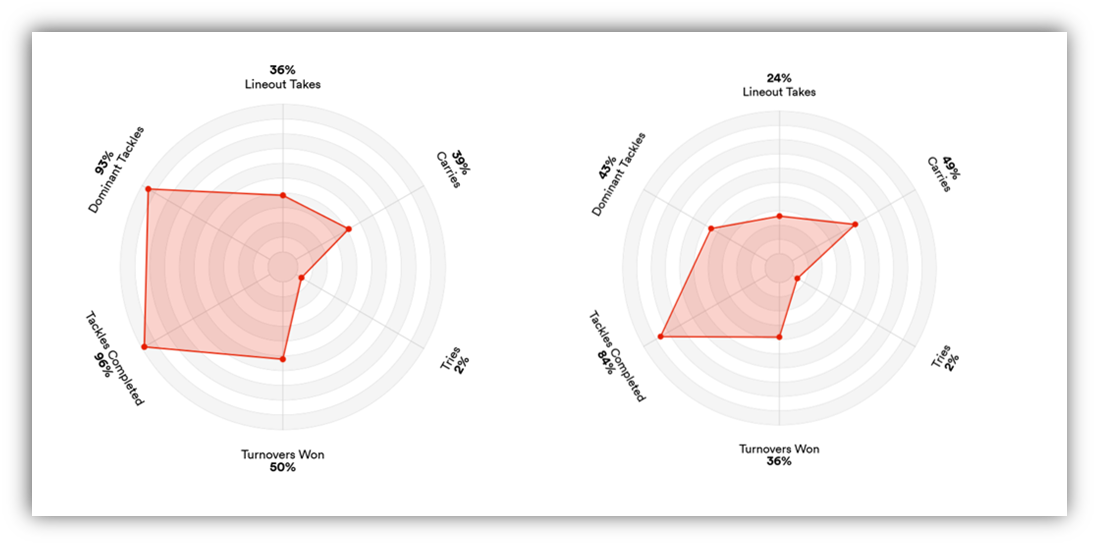
Parker’s 2025 and ’26 SRP seasons compared: less dominant and less accurate on defence, less involved in the lineout, less proficient in winning turnovers. He will need a strong second half of the competition to make his case (Graph from RugbyPass)
So how are the blindsides performing for the different Kiwi SRP teams? How are they used and will that transfer to Test rugby? And what will Dave Rennie be looking for?
Another categorisation
But before I can (try to) answer some of these questions, I’ll quickly go back to my post from last year (see the first post in this thread). There I tried to make sense of the options by distinguishing between tight and loose blindsides, with the AB selectors ultimately looking for a player equally comfortable in both roles.
Here, I’ll move away from this categorisation. Rather than separating blindsides on the basis of their area of play, I’ll instead try to make a distinction on the basis of their output on the field. Looking at this year’s blindsides – Barnes, Segner (Blues), Parker, Finau (Chiefs), Flanders (Hurricanes), Gardiner, Blackadder (Crusaders), Howden (Hurricanes) – we can discern two groups: those who stand out through the sheer volume of their work and those who make a case for selection through the dominance of their actions.
We can get a clearer picture of this distinction by visualizing the on-field output of the current blindsides. Below, there’s two graphs, one outlining the work rate of the different flankers (volume), and one looking to show the impact of their involvements (dominance).
In order to get a sense of work rate, I collected the total attacking (TAI) and total defensive involvements (TDI) of the different blindsides. The attacking involvements are made up of carries, passes and attacking cleans (on a per 80 min basis). The defensive involvements consist of tackles and defensive ruck attendances. Because Opta no longer includes Super Rugby Pacific in their stats hub for this season, I had to gather my own data for the breakdown. Since I can’t possibly do this for each game the blindsides have played so far (how many times a player cleaned a ruck on attack or disrupted the breakdown on defence), I limited myself to just one game per player for (attacking and defensive) ruck attendances. I’ve checked this data by keeping an eye on blindside ruck involvements throughout the comp, so as to make sure the data are a fair reflection (which they are).
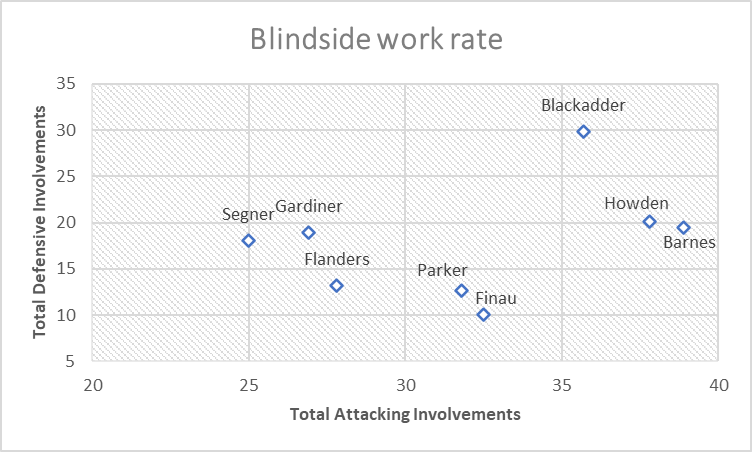
A first delineation already becomes clear: Blackadder, Howden and Barnes stand out in terms of their involvements on attack and defence throughout the 80 minutes
Just watching Blackadder for a whole game, you do start to appreciate more the sheer volume of work he gets through. While he doesn’t carry as much as other blindsides, he’s incredibly involved in the breakdown on both sides of the ball while also putting in more tackle attempts than anyone else. His defensive ruck involvements also show that even when he’s playing at six, he still offers the work of an extra openside, disrupting the opposition breakdown throughout the game.

Total attacking and total defensive involvements (all stats used are from RugbyPass SRP, rounds 1-8)
While Howden has relatively similar numbers to Blackadder (without the openside aspects), Barnes is a relative unicorn across the NZ blindside landscape in that he combines breakdown and defensive work rate with volume carrying as well. His current use off the bench for the Blues seems to be related to this relentless energy expenditure: despite coming on the field at halftime against the Waratahs, Barnes managed to squeeze in nearly 80 minutes of effort (12 carries, 8 tackles, 4 lineouts won, 2 dominant tackles). If he’s going to be an 80 minute player, he might need to learn how to manage his workload.
So what of this other group (Flanders, Gardiner, Parker, Finau, Segner)? Why don’t they carry more, or clean more rucks? The work rate numbers make more sense when we compare the graph above with the one below, wherein the degree of dominance is measured. This aspect of dominance is reflected both in attack and defence: how many carries produce a tackle bust (% of carrying dominance) and how many tackles are dominant (% of tackle dominance)? When put like this, the two groups switch places on both axes.
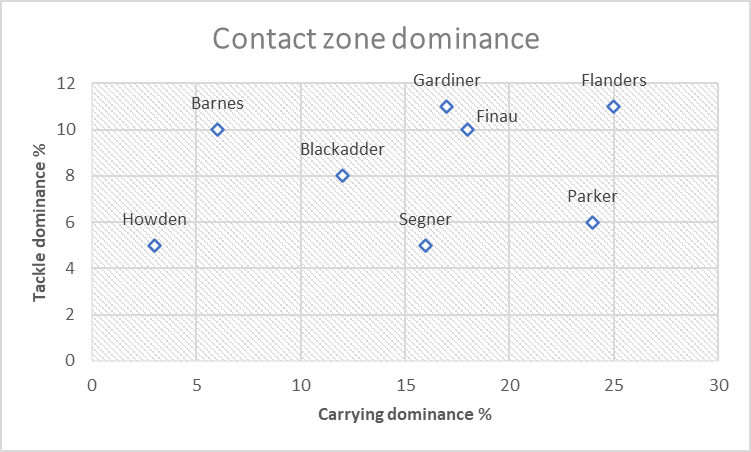
So the last shall be first, and the first last: for blindsides, you’re picking either work rate or dominance, not both
The leading group for work rate now neatly falls to the back of the queue, with Howden, Barnes and Blackadder being last for carrying dominance. A new name now jumps out: Devan Flanders is able to tackle with dominance as well as consistently beat defenders with his carries. So while he doesn’t necessarily fill up the stat sheet for 80 minutes, when the Hurricanes blindside does intervene, it is often decisive.
The same goes for a player like Samipeni Finau: he hasn’t tackled as much this season as in previous ones (0.1 tackle per minute in 2026 versus 0.13 in 2025) but when he does, it is often to great effect, like his crunching hit on Siosifa Amone in round 8.
Whether Dave Rennie will pick a workhorse at 6 or someone who can be a dominant presence on the field will largely depend on both how he wants to play as well as the makeup of his loose forward trio.
Another question mark
Currently, Rennie’s team at Kobe has Savea at openside. Savea has made it difficult for a number of AB coaches to balance the loose forward trio, with Hansen and Foster turning him into a number 8 in order to get the balance right. Rennie seems to disagree with this approach, a disagreement which is most likely related to the former Chiefs’ coach’s vision of the breakdown. Savea can come up short in the defensive physicality stakes but what he does do very well is spot turnover opportunities. This fits well into Rennie’s game plan which isn’t built around winning the defensive contact but around making an absolute mess of the opposition breakdown. Savea has already won 14 turnovers for the Steelers. His blindside partner-in-crime, Tiennan Costley, has won 10 of his own.
So what is a Rennie blindside? Below you can find the RugbyPass chart for Costley’s statistical profile. What stands out? Lineout proficiency, tackle dominance and breakdown prowess.
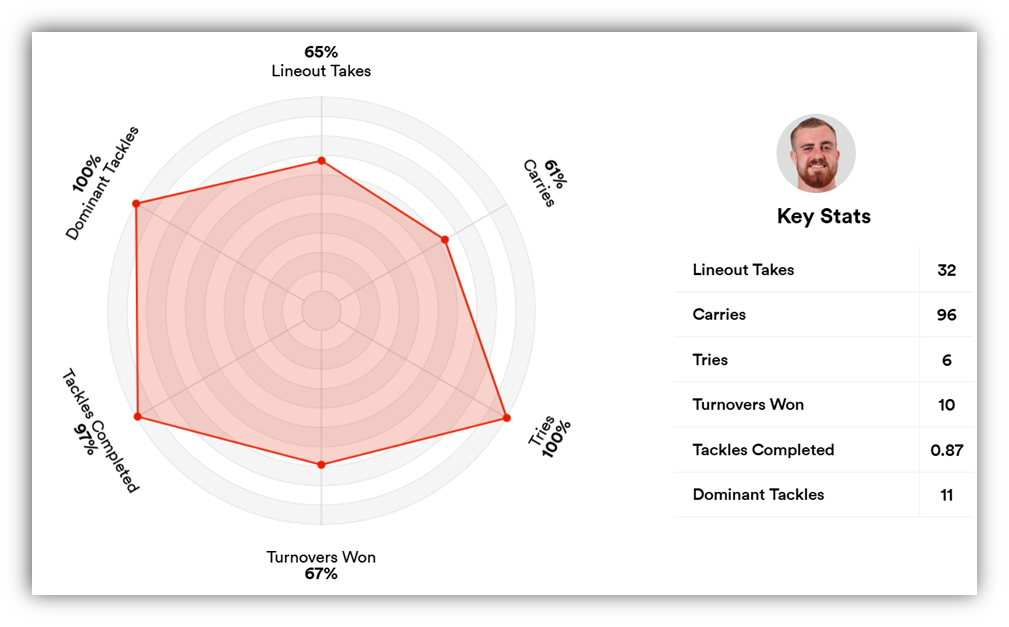
Rennie’s blindside at Kobe Steelers: Aussie-born, Kiwi-raised Tiennan Costley
So the set piece is a big part of Rennie’s thinking for the 6. Looking at the Kiwi contenders from this SRP season, a few players stand out in the lineout.

Flanders, Finau, Segner and Howden average 2.5 lineouts won or more per game, with Flanders the most adept at stealing opposition ball
Costley averages around 2.5 lineouts won for the Steelers. Several Kiwi blindsides reach this threshold as well, with Howden leading the pack with an average of around 4 lineouts won per game. Flanders is part of a Hurricanes lineout which goes aggressively at opposition ball, the Hawke’s Bay loose forward already responsible for 6 steals himself.
The Crusaders don’t use their blindsides in the lineout all that often, using Blackadder for hit-ups in the midfield. If Rennie isn’t convinced of their previous ability in that area, that might cost them. Another player that might see his selection stocks rise, is Anton Segner, who has slowly turned into one of the competition’s best lineout forwards. That, coupled with his ability to both disrupt opposition breakdown and win turnovers, might make him a surprise package for the Rennie ABs.
The future of the position? AN Other
So while there are plenty of options for Dave Rennie, it is safe to say that none of them scream Test blindside. The typical image of the blindside as the hitman (Collins) or the defensive rock (Kaino) seems like it won’t be able to be recreated by any of the current contenders.
Then again, a creative approach might be in order here and it seems like the Hurricanes are currently leading the way in that regard in more ways than one. The Canes play Flanders on the edge where he can use his pace and offloading ability to beat defenders and create line breaks. But that leaves their defensive middle without a bruising loose forward presence, with both Kirifi and Lakai on the smaller side for loose forwards.
Enter Asafo Aumua and the Hurricanes tight five. While most of the plaudits have gone to the backline, the Canes tight five have been incredibly aggressive in contact, on defence especially. While Aumua first burst onto the scene as an explosive runner out wide, he has since redeveloped himself as a gritty, and dare I say, blindside-esque tackler in the middle of the field, halting opposition forwards in their step and absolutely folding roaming backs.


The spirit of Jerry lives on, in the body of a squat hooker out of Lower Hutt
Picking a tight five that can take over some of the tasks typically associated with the loose forwards – breakdown contestation, dominant tackling – further frees up those loose forwards to add some more strings to their bow, such as ball-carrying out wide. Either way, none of the current loose forwards are hitting as hard as Aumua right now, so if dominant tackling is to be part of the 2026 ABs, players like the Hurricanes hooker need to be involved.
Whatever Dave Rennie chooses to do, it’s clear he’ll need to be a little creative to make the loose forward trio work. With a lack of clear bruisers at blindside and a chip-kicking Ardie to deal with, that’s no easy task. I’m pretty sure it killed the last guy. Either way, I’m rooting for him. Then again, I’m still half-expecting to write a similar thing once again next year.