I thought it was a great Test match. Normally, I’d like to reaffirm such an occasion by giving it as much time and space as possible: watching the game multiple times, comparing it to other Tests, sifting through numbers and footage before writing a (too) long review of the match at hand. But as I’m suffering (yes, suffering) from a combination of work and rugby fatigue, no such time could be afforded. Fortunately, the ABs are once again showing what to do in times like this: why slog away when it’s easier and more efficient to do things as quickly as possible?
Stop overwriting, stop overplaying
I’m sure everyone remembers my treatise written after last year’s French Test on the AB set-piece attack. It was an avalanche of information: YouTube videos with time stamps, picture frames, and words, so many words. In a way, it mimicked what was happening on the field, the ABs trying to overwhelm their opposition with an avalanche of possession, carries and passing. Against the biggest sides in Test rugby, South Africa and France, the All Blacks simply tried to do too much in 2024.

A lot of passing (186 on average), more than their fair share of 22 entries (8.3) but not a lot of purchase from those entries (2.3 points per entry): this was the story of 2024. On Saturday against the Springboks, however, a very different picture appeared.

Way less passing (125), way more kicking (34) and, most importantly, the appearance of brutal efficiency when entering the opposition 22 (4.2 points per entry). So less really is more?
The tragedy of Jason Holland
In last year’s verbose review, I tried to finish somewhat succinctly: “If the Hurricane lineout strike is going to return to Test rugby in 2025, Jason Holland will need to find a way of sharpening it, where it can finally cut through South African and French Test defences.”
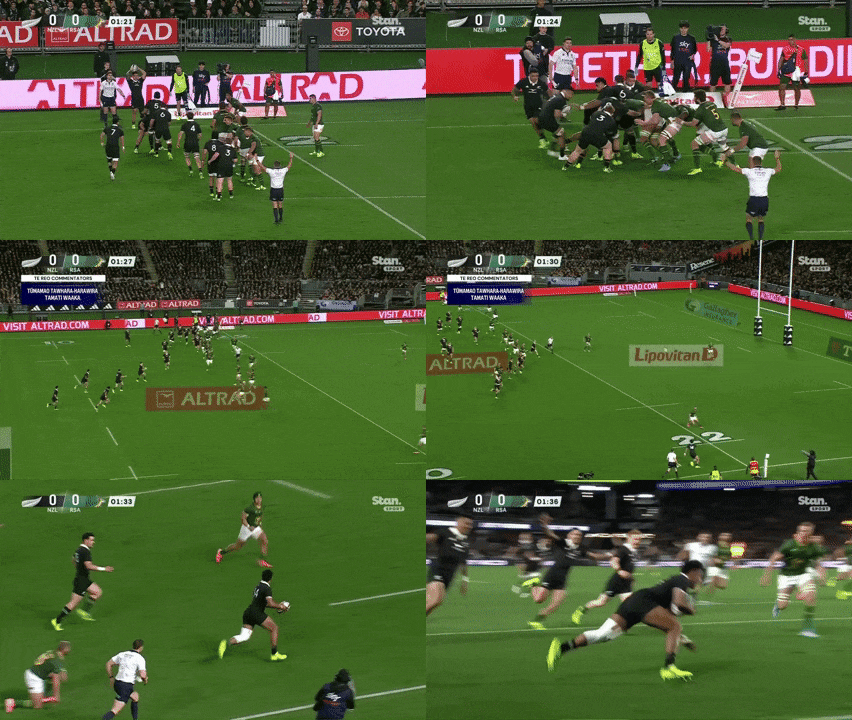
As if Holland took that little comment personally, we saw the set-up for the arrow attack return in the very first minute of Saturday’s Test. But rather than some elaborate midfield play, Barrett went for the simple first-phase cross-kick, directly attacking the defensively weak Willie Le Roux in the simplest way possible.
The real Wayne Smith-doctrine: play to space as quickly as possible
Things do not have to be complicated to work well. Why try to go through the Springbok midfield defence – by far the best in the world – if you can simply go around it, targeting the obvious backline weakness?
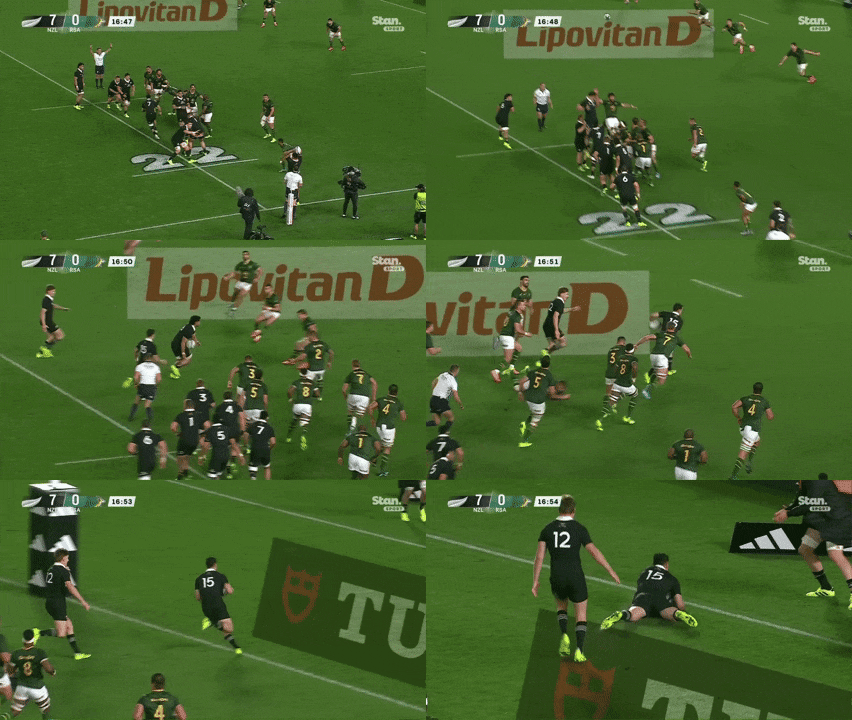
Holland has seemingly learned a lot from last year’s often overcomplicated Test campaign, as simplicity and straightforwardness are key terms in this year’s set-piece attack. 15 minutes later, with another lineout on the opposition 22, another set-piece strike embodied the same principles. Target the slower Bok seams with your best hole runners (Jordan/Jordie Barrett) and find out what happens. As it happened, the secondary runner (Jordie) wasn't even necessary to finish the play.
Not all Boks are great defenders so the goal is to isolate and target them
If Jason Holland’s main responsibility is to create strike plays, then I think it’s fair to say he’s more than earning his coin at the minute, with an increase in redzone efficiency against a side like the Springboks. Whether he'll get much credit for this is still up in the air. But as the Greek tragedies have taught us, future glory never comes from a clear and easy path.
Finishing the job
I guess I could keep going, looking at defensive patterns, some individual performances, and what may happen next week. Big occasions can tempt you like that: you want to be elaborate, give it the attention it really deserves, keep basking in its light for as long as possible.
But if Robertson and his coaches have seemingly learned anything from last year, it’s that the bigger arena doesn’t necessarily require a more complex playbook. Rather, it requires cutting back and doing the simple things well: kick for territory, make your tackles, attack opposition ball. Try the easy things first before making it harder for yourself.
And since they so obviously want all of us on their journey with them, perhaps I should try taking a page out of their book. Keep it nice and simple, and just see what happens.










 )
)